Guest

Mark Hertling
U.S. Army Lieutenant General (Ret.)
Hosted by
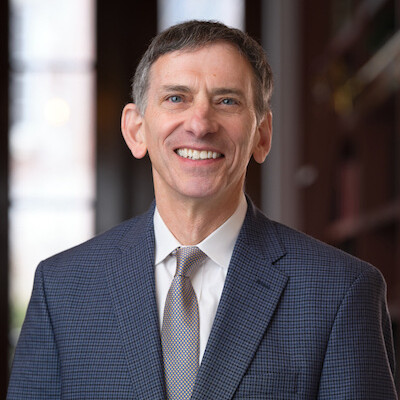
Joel H. Rosenthal
President, Carnegie Council
How can we rebuild trust and reinvigorate values-based leadership amid domestic and geopolitical upheaval?
U.S. Army Lt. General (ret.) Mark Hertling visits Carnegie Council to discuss the state of U.S. foreign policy, the release of his new book If I Don’t Return, and the moral-political fork in the road in America in 2026.
Access the full event below. You can purchase Lt. General Hertling's book here.
KEVIN MALONEY: I first met Mark virtually about a year ago, when we had a conversation that we recorded for the Council. I personally learned a lot, and I knew he was somebody who “walked the walk” when it comes to values and somebody we had to have a deep relationship with here at the Council.
I am so happy you are here today, and I know Joel has been looking forward to this as well. It is quite the moment to talk about the intersection of ethics, morality, and power in international relations from a U.S. perspective.
With that, I will hand it over to Joel. Thank you so much again.
JOEL ROSENTHAL: Thank you, General, for being here today.
MARK HERTLING: Can we dispense with the “General” for tonight? Can you just call me Mark?
JOEL ROSENTHAL: I know that Mark was up at 6:00 this morning because I saw him on TV.
MARK HERTLING: I was up at 5:00.
JOEL ROSENTHAL: Of course, 5:00 to be ready for 6:00. A double thank-you for being here on such a busy day.
Today is the publication date of the book, If I Don’t Return: A Father’s Wartime Journal, so I would urge you all to buy it. I noticed this morning that there was a great review of the book in The Wall Street Journal.
MARK HERTLING: Yes. It was surprising.
JOEL ROSENTHAL: You should all take a look at that as well.
You don’t need an introduction, so I’m not going to go through all of that, but I am frequently asked by friends and family: “You are president of Carnegie Council for Ethics in International Affairs. What do you think about what’s happening in our country and in the world?”
My reply is: “I’m president of the Carnegie Council for Ethics in International Affairs. What do you think I think?” I think everybody understands that. Something is going on.
I have been referring to Prime Minister Carney’s speech about rupture. Something is moving, something is changing, and it seems to me that we are leaving something that has to do with ethics, values, and leadership, and we are going to something else, or at least that is up for grabs. I think all of us are looking for some kind of moral compass to get through this.
I don’t mean this just to flatter you or as hyperbole or whatever, but when I read your book and listened to you, I thought, that’s what we need. So, thank you for that. Thank you being here.
Part of the challenge of a place like this is people asking: “Ethics and International Affairs? What do you mean?” The best way to do that is to show it, and the work you have done in your life and your career. Thank you for that.
With that said, I am going to kick it off. We want this to be interactive. That is why we have set it up like this. We want people to ask questions. We want to have engagement, and I think that is what you want to do as well.
MARK HERTLING: Absolutely.
JOEL ROSENTHAL: If you wouldn’t mind the softball to tee it up, maybe you could talk a little about the book and what got you to write it but also speak to what is happening right now. I don’t know if you had that in mind when you were writing the book, but if you could start to make that connection, and then I want to open it up so people can have a conversation with you.
MARK HERTLING: Joel, I smiled and snickered when you mentioned Prime Minister Carney because two weeks ago I gave a speech at a conference called Principles First. They asked me to speak briefly, 20 minutes, before the lunch break, and I used what Prime Minister Carney said about what he did about the changing environment of the world. I am drawing a blank on the name, and I am not prepared to talk about this, but Carney’s speech was so magnificent in terms of a speech for the ages, and I bookended it with a comment from a Canadian journalist. What he said after the Halifax International Security Forum was, “The Americans ain’t f-ing coming back.”
My response to that is, “Oh, yes, we will.” We won’t come back the way we were, but we are going to come back differently, and in order to do that we have to generate trust. I think that was what Prime Minister Carney was getting at, that the world has lost trust in who we are because they are confused about who we are right now. That is kind of an introduction.
I will tell the quick story of my book. It is not a war book, for those who are interested and saying, “Well, you’ve got a soldier on the cover.” It came about this way: In 1990 when Secretary of Defense Cheney came on the Armed Forces Network I was a young major in Germany, and we were told, “Watch the news tonight.” It was November, and they said that the secretary of defense is going to make an announcement. The announcement was that the entire Seventh U.S. Corps out of Europe was going to go to Operation Desert Storm. None of us knew that was going to happen, so the announcement of deploying an entire corps of about 180,000 soldiers shocked the hell out of all of us as we were watching the Armed Forces Network in Germany.
I was a major and the operations officer for a cavalry squadron, and after the craziness of phone calls with both the squadron commander and troop commanders that night, saying, “Let’s talk about this in the morning when you come in”—it was 10:00 at night I think when the announcement was made—we went in the next day and received our intelligence briefing from the division intelligence officer, and he told us that the cavalry squadron, which was going to be out front of the division in this attack into Iraq, would probably sustain about 50 percent casualties. My immediate response to that in my head was: Holy crap! I might just have a coin-flip chance of not coming home.
Unlike Jason, who has five boys, we only had two at the time. They were seven and ten years old, and I thought to myself: Man, I’m never going to see my kids again, never going to ride bikes with my wife, never going to drink another weizen beer in Germany.
I started thinking about, how, when I do what the country is asking me to do, do I provide something for our sons and my wife, who might be a widow, to carry them through their life? My action came to writing a journal.
I took this little green notebook, which I now still have—I didn’t have it for a while because it was in a footlocker and then our youngest son stole it from me—and started writing daily entries. They ranged from the sublime to the ridiculous, anywhere from ethics, values, friendship, character, emotions, love of my wife and love of my boys. One of the first chapters was about my fear of dying, which changed over the years, and I will share more of that in a minute. Then, when it got into the war, after the four-day war was over for us ground troops, I talked about the war and what happened.
It is a book that just runs the gamut of different topics. I woke up every morning and said, “I think I’ll talk about this today,” and I did. I wrote about it.
Here’s the spoiler alert: I survived. When I came home, our boys were now eight and eleven as opposed to seven and ten when I left, and they wanted nothing to do with a journal of reflections from their old man, so I threw it in a footlocker and forget about it.
A couple of years ago, our youngest son, Scott, asked Sue, my wife, “Where’s that journal dad kept during Desert Storm?” He had been through three combat deployments. Our oldest son had been through five at the time. She gave him the notebook. He is out of the Army now and working in government in Washington. Unbeknownst to me, he started transcribing it into a Word document and inserting pictures.
At Christmas of 2024, when all the grandkids were done unwrapping their presents and going crazy and we were on our fourth cup of coffee with Kahlua in it, he came up to me when everyone else was out of the room and said: “Dad, this present is just for you.” I opened it, and it was this typewritten journal in a Word document.
Of course, it brought about some emotions and the sights, smells, and sounds of the desert. He said: “Dad, my brother and I realized why you were writing this. It was for us, in case you didn’t come home. But now you have had 30 years additional combat deployments and a whole bunch of experiences in and out of the Army. Write more for your grandkids.”
It was cool because I did not have to establish an outline for a book. I just took the journal entries that were half-page to a page long and wrote what came after that on all the different topics from intelligence to friendships to blessings to emotions to marriage, and it was amazing to me in the 35 years following Desert Storm how much things had changed.
One of the things that did not change was the fact that ethics and character remain the same. Love of family and elements of leadership remain the same. The aperture has just widened. As an old guy now, all of those things taught me things I didn’t know. What was fascinating about it was this whole experience gave me time to reflect.
We don’t reflect as human beings. We don’t. Every once in a while we will think, Oh, gee, I wish I had done this differently, or something like that, but we don’t look at our life’s journey in terms of being built by character, ethics, behaviors, leadership, and love for our family. That was the journey of the book.
I was on Nicolle Wallace’s show right before I came over here, and she started reading one of the opening chapters as a lead-in to what she was going to ask me, and she started crying. Of course, as I say in the book, my wife accuses me of crying at supermarket openings, but I said: “Hey, Nicolle, if you really want to get choked up, get to the last chapter,” because the last chapter is all about Douglas MacArthur’s prayer for his son, and if you have never read MacArthur’s prayer for his son, read it.
I am not a big MacArthur fan truthfully, but despite being the conqueror of Japan and all of the other things he did in his career, his prayer for his son was probably the best work he ever did because I think that gets to what we are trying to get to tonight, which is, what do you look for in fellow human beings that contributes to what “right” looks like in our daily living?
JOEL ROSENTHAL: I don’t want to make this political, but I do want to get it to the moment we are in right now. You had a leadership position in the Department of Defense. It is now the Department of War.
MARK HERTLING: No, it’s not.
JOEL ROSENTHAL: Okay, but I want to talk about that a little bit because the leadership is now talking about “lethality instead of legality.” I think that is an accurate paraphrase.
I am curious how we are all to process the clash of everything that you write in the book about character, the tradition of the United States military, and the great care of that tradition of ethics, leadership, and all the things you were talking about against the political reality of the moment. As somebody sitting on the outside of this, I just worry: Will this message prevail over time, because it is not where we are being led?
MARK HERTLING: It’s a good question, and I am going to hearken back to my best friend and mentor, Marty Dempsey. He and I have almost daily exchanges about what is going on. I am probably more outspoken than he is, but he keeps going back to the fact that we see ebbs and flows in every society like this, but mankind, if they are led correctly, keep going back to what is right, ethical, and pure.
I don’t know if I am alone in this, but I believe there is an inherent desire for every human being to feel like they are seeking the good. I am sure there is a philosopher who put it a lot better than I did, but you want to feel like you are making a difference for your children, for the next generation, and for your work.
The interesting piece of all this is one of the other things Marty Dempsey taught me, which is that professions all have specific things that are required of them. What I have learned since I have been teaching at a business school is that businesses have the same requirements—a set of values, an ethos, a requirement to learn and grow every day, and a requirement to discipline or dismiss fellow professionals if they don’t live up to the standards of the profession—and that in each one of the professions you are asked to do things that no one else in society can do.
My dear friend Jason Wright is a lawyer. The profession of law has that professional ethos, and just like every other profession, some “professionals,” if they call themselves that, don’t live up to it, but they are not really professionals if they don’t. How does that correspond to the rest of society? Business leaders have the same kinds of requirements, except they can transfer around to different industries.
To get back to your very simple question, Joel, I firmly believe that we will get back to what is right, but I don’t think that is going to be enough. We are going to have to regain trust with our allies because we have lost the trust. Somewhere in the book I think I say, “My dad once told me that trust is gained in drops and lost in buckets,” and we have lost truckloads of trust over the last 13 months. How do you rebuild that trust with other nations and with your own citizens as you are trying to destroy institutions with things like values when there is stuff like mis- and mal- and disinformation all over the internet?
I’m glad I’m not going to be around to see it. The five young men that Jason is raising are going to be around to see that. They are going to have to deal with it, so we are going to have to set them up as best we can for success because that’s what generations do.
JO SLETBAK: Can I follow up on that because I think you are touching on something very important. I also have a question. You are talking about generations. I do hope you are around for a long time because we need to pass this on from generation to generation.
I am very lucky that I grew up in Norway with all my four grandparents alive. I learned a lot about the history of World War II, when Norway was occupied for five years by the Nazis, and how my grandmother had to clean for two SS officers in her house that my dad grew up in, but I learned that from listening to them. Where is that generational gap today? How do we transfer that part today?
I am also extremely lucky that we have a cabin in the North of Norway—
MARK HERTLING: All Norwegians have a cabin in the North of Norway. I know your cult.
JO SLETBAK: We do have a TV because we need that to get the kids up, but we end up sitting there in the snow and have conversations with the children. It is incredibly valuable, and we need to somehow transfer that.
I was also in the army in Norway as my son has also been because it is a mandatory service that I think serves us well. I worked in the Balkans for many years. I have stood in more mass graves than I thought I was going to do in this time of year in Europe, which was not pleasant, but I also had the good fortune to study here in the United States. Maybe that is why I speak English the way I do.
Being here I have always admired the United States as most Europeans have in rallying around the flag: “So I didn’t vote for the president, but he is my commander-in-chief. We rally around the flag.” This is a lacking part in my observation today because of the polarization, and I do hope that you find the way back to that because that is going to be important as a leading star for others as well because we do look to the United States in many, many ways, but that is what you are now losing.
From the Consulate here we have to send reports back home and tell them the United States is not a country, it’s a continent, and you can still do business here. People are afraid: What does it mean to come to the United States now?
We need to change that narrative. You need to get back from where you are. That is an observation from a diplomat who usually thinks twice before he says nothing.
MARK HERTLING: The speech that I gave at the Principles First conference I saw as an opportunity to state some of those things. One of the things I wrote in the first draft made my beautiful wife slap me across the head. She said: “You can’t say this. This will turn people off.”
I used the example of a cheating husband who has gone astray for whatever reason, and for the most part their spouse would not forgive them because of behaviors, which is I think what you are talking about, behaviors that you did not expect to see in your mate. Most marriages don’t survive something like that, but some do, when there is true contrition, humility, remorse, and a desire to do better in the future. I think that is what is going to drive us, and that truthfully is not in line with the American psyche. None of those traits are.
Humility is not us. We are a nation of swagger, which I can’t stand. We are a nation that pumps our chest and decides that we are going to do everything better. Even the phrase, “American exceptionalism,” is pretty bold to say. We are a nation that began a movement not just toward freedom, which some people are saying but societal contributions. We seem to have left that second part off.
I think it is a renewal of the values that are in our founding documents, which you all know, and the great speeches of our history—Kennedy’s inauguration, FDR’s Four Freedoms, Martin Luther King, Jr.’s “I Have a Dream,” the Gettysburg Address. All of the words that come out of those proclamations that define who we are as a nation we have to look at again. We have not seen a lot of those in the last year-plus.
I don’t know how to say it other than that. It is going to take an uprising and an upheaval. There is a guy named Tom Nichols who wrote a book called The Death of Expertise: The Campaign Against Established Knowledge and Why it Matters. He is a good friend of mind. I talked to him about it: I said, “Tom, what were you saying?”
He got back to Aristotle and Plato, and he said: “You know, the Aristotelian qualities are logic, reason, and passion. What we have gone toward is singularly passion. It is what we believe, and it doesn’t matter what the logic and reason are. It’s just, ‘Hey, here’s my opinion; live with it,’ and we are going to have to get past that.” I think we can.
By the way, other people have done this. Societies have fallen. I don’t know much about the Norge history, but I am sure your country has fallen a couple of times. Germany and Japan fell in World War II, but it took them generations to rebuild, to get back to normal, and now they are some of the models of society.
Can we do it? Man, I sure hope so.
JOEL ROSENTHAL: Maybe this will be a good way to get in a word about leadership because that seems to be something that is lacking here now. One of my questions would be, where are these values going to come from? They are going to come from individuals, they are going to come from exemplars, but they are also going to come from institutions.
MARK HERTLING: And individuals.
JOEL ROSENTHAL: And individuals, but it seems to me if you look around there is a lot of caving in.
MARK HERTLING: If you go to any private-sector organization, there are all kinds of values painted on their walls, put on their websites, and allegedly exhibited by their employees, but when you ask the employers they don’t know what the hell their values are, and I know that because I have asked in presentations. I was once at a speech to a bunch of corporate executives from very large corporations with the initials of Siemens, and I asked, “What are your corporate values?”
There was a sea of corporate executives out there, and they did not know. They were giving me truthfully b.s. answers: “Oh, we believe in excellence.” You can’t define any of those things.
I will never forget this. One guy stood up and said: “General, I know you are interested in having us exhibit what our values are. They are written on our website.” That was his answer.
JOEL ROSENTHAL: Wow.
MARK HERTLING: Because I had done preparation for the speech, I said: “I know that. In fact, they are written twice, and they are two different sets of values.”
The point to that story is: Do we all have a set of values? Do we know what we believe in, what we stand for, and what will help us make decisions in crises? Truthfully, I have had a set of values in my life and realized that on some occasions I have violated them and done some bad things when I didn’t think about them. It is hard to continue to exhibit your values. It is harder still if you don’t know what they are.
You talk leadership. If you look at the Army model, and I hate to bring that up, that is in Army Field Manual 22-6—I am not making this up; there is actually a field manual for leadership—it tells you that your character is based on your upbringing, your background, your culture, and your values. Yet when I ask people what their values are, if you are in the Army, you can say what they are: Loyalty, duty, respect, selfless service, honor, integrity, and personal courage. You live in those things.
If I ask individuals what are your personal values, what do you believe in, what generates decision making on your part, and what do you want to be known for, I often personally don’t get good answers, but the essence of leadership is character, as I think President Obama once said.
JAMES KETTERER: I wanted to put some specificity to this in the moment we are in right now, the moment in which we, the United States, are sending people into harm’s way and ethics and values are being tested on a tactical level. The media is filled with all kinds of analyses of what is going on with Iran, what is the endgame, et cetera.
I keep coming back to the torpedo attack on the Iranian ship. We sent a lot of Iranian sons, brothers, and fathers to the bottom of the ocean, and we had other choices. There were other things that could have been done at the leadership level, but we are also asking people in our submarine to do a very difficult thing. They know that there are other options and they are under orders to torpedo that ship. That is a moment of testing.
I happen to know from Iranian friends of mine that this has deeply, deeply upset the Iranian people. They know that was not necessary. They know that we did that almost to make a video game out of it. We know the effect on the Iranian people from such an act, even people inclined to be maybe otherwise pleased with what is going on, but I think we lose sight of the fact—I know you don’t because you have lived it—of what it does when you are put in a situation where you have to make that call as an American military person.
MARK HERTLING: In that particular case, I can echo it back to values. It’s hubris. We did it because we could. And it’s swagger. We not only did it because we could; we wanted to prove how tough we are.
Can I bring someone else into this conversation? Jason Wright, if I can introduce you to him, is a lawyer, a very well-paid lawyer, I might add, but Jason was my aide-de-camp in Iraq. The judge advocate general of the Army thought I was crazy when I was choosing an international law expert to be my aide-de-camp, but he allowed me to do it. I am going to let Jason answer the question, if you don’t mind, in terms of cultural norms and obedience or disobedience of orders that are on the razor’s edge. He constantly advised me on this, so he is the expert at it.
JAMES KETTERER: Jason, let me add one element to this. I am not saying that the action that was taken was a violation of international law. We could do it, but was it wise and was it right to do it?
MARK HERTLING: And you weigh all those things.
JASON WRIGHT: You do. Of course, I am going to have a tendency to revert to the law.
Certainly, from the international criminal law framework, when it comes to personal responsibility the Army has enshrined in doctrine, regulation, and the law that all service members—the Navy as well—have a duty to reject manifestly unlawful orders. This is a precedent that has been around since some of the first international criminal tribunals. The standard is “manifestly unlawful.”
There is a working assumption that orders should be lawful, but that gets to the legal framework. It does not get to the normative framework. Of course, our laws are based on normative values, the same values that Mark has been talking about today.
If there is a service member facing that situation, they still have a choice they can make. It may not be one that is going to be beneficial to their career. It may come with consequences when it comes to court martial or other discipline, but there still is an individual choice that someone can make along the way.
MARK HERTLING: If I can add to that because it gets directly to the scenario of the submarine launching a torpedo, what many people don’t realize was that George Washington was phenomenally brilliant in his desire to write the oaths of office. There is an oath for enlisted people, and in the oath for enlisted there is the phrase, “I will obey the orders of the president and the orders of the officers appointed over me.” That phrase is not in the officer’s oath. The phrase in the officer’s oath is, “I will take this obligation willingly, without any mental reservation or purpose of evasion.”
We recite those oaths, both enlisted’s and officer’s, through our years, and it is fascinating that no one really understands what they mean. It is up to the officers to determine on their own, unless they have a great lawyer who says, “Ooh, I don’t think you want to do that,” to determine what orders should be followed.
In the case with the submarine, I don’t know what happened. I don’t know what was going on as the guy was looking through the periscope, but there was one guy who said, “Fire torpedo one,” or whatever they say in submarine talk, and the crew did it because they trusted the individual, the man or woman who was on the periscope, to do the right thing. That is where it’s fuzzy right now. Would you agree?
JASON WRIGHT: I would agree.
MARK HERTLING: How many times did you have to pull me aside and say, “Hey boss?”
JASON WRIGHT: Not that many times. But I did have to make the choice myself, which is why I entered civilian practice. I was representing Khalid Sheikh Mohammed before the 9/11 military commissions as a defense officer. I had been counsel for three years, and then I was reassigned. That is the improper severance of the attorney-client relationship when you are a capital defense lawyer and you get moved off of a case. There is a series of cases under Supreme Court precedent and the like, so I turned down the order to be reassigned. As a result of that, I made a choice, and I was involuntary separated, with honor, from the military six months from the day of the turndown, but I turned it down based on constitutional principles.
MARK HERTLING: If I can add to that, when I heard Jason was doing this—and I admire this guy beyond belief—and I told my wife, she said: “Oh, my god! They’re losing a great officer.”
I said: “Yeah, but that’s Jason. That’s exactly what the right thing is.” Truthfully, how many people have the courage to make that decision?
JAMES KETTERER: Very tough decision.
JASON WRIGHT: To bring it back to today, I had a great mentor, so I was able to see a lot of these lessons in action.
MARK HERTLING: As we are giving love to each other here, we should probably move on.
JO SLETBAK: But isn’t what we are seeing today that that discussion has come up again and again here that leads to this?
MARK HERTLING: That’s right. I have always been told that the Army’s organization takes on the personality of the leader, and that defines it. That is what is happening today.
JOHN DAVENPORT: I have no military service. The question I am going to ask is a hard one to ask someone.
It follows directly on from Jim, so maybe this is useful. I won’t necessarily say I support this, on the trajectory of American military operations, some of which were with the North Atlantic Treaty Organization (NATO)—I know you were involved with the Libya operation, for example, and thanks of course for that and the rest of your service—one perspective may be that because of the concern about casualties among our armed forces we have come to rely more and more on bombing, to the point where that is practically all we do along with the occasional torpedo.
I wonder how it would sound to our military command and even more importantly to the broad spectrum of people serving in American uniform if it was said to them, and this is a very hard thing to say, that this strategy, while it reduces casualties—I thought of this question when you were mentioning a 50 percent casualty rate projected for the cavalry; that is exactly what I think this tendency is trying to avoid—it has the effect that we are perceived throughout much of the world as cowards even, that we don’t want our forces to engage directly because of the risks.
This obviously was not the case in Afghanistan, and of course the long occupation of Iraq had a lot of ground operations too, but more and more we see this with Iran today, and I wonder if that is damaging and, among many other things, is one of the main drivers of our negative appearance to the world community and maybe that is something that needs to change as a kind of strategic priority, but the cost of doing so would fall on the lives lost among our military.
MARK HERTLING: The primacy of technological advances seems to be overriding human behavior.
JOHN DAVENPORT: That is exactly what I am worried about. I am teaching “just war” theory right now, and that is why I am asking this.
MARK HERTLING: We even have the dependence on drones or unmanned systems. I am not smart enough to figure this out. I think there is a requirement of societies to stand up, and this gets to the character issue, for what they believe in. You can’t do that with machines. As an individual, you have to draw a line and say, “Don’t cross this because it’s wrong.”
I think we are heading more and more toward artificial intelligence, unmanned aircraft, and unmanned seacraft that will do the stuff for us without a soul. That is simplistic, I know, but you are teaching just war theory and those kinds of things are hard to explain.
JOHN DAVENPORT: It also has the political effect of making it easier to attack rather than the deeper cost we would face if we were more intimately involved.
MARK HERTLING: I shouldn’t insult this way, but look at the swagger of the current secretary of defense, saying that he controls the outcome. I’m sorry, and I hate to be profane, but what bullshit. You don’t control anything in war. It is human conflict. It is chaos. The only thing you control is the amount of chaos you have, and that is part of the training of governments and militaries to understand how rife that is toward violation.
Again, it gets back to values. Are you humble or are you filled with hubris?
JO SLETBAK: Does the ethics question change much whether you sit in a bunker somewhere and fly a drone or drop a bomb?
MARK HERTLING: No. There are unmanned aerial vehicle pilots I have talked with who are experiencing post-traumatic stress disorder. By the way, there is a chapter in the book, and I will give a spoiler on this, where I talk about how I lied to my sons because I told them that after the war we were going through some bunkers and cleansing them of what we thought was in this particular area after the ceasefire was signed, and we got lazy and complacent in terms of approaching these. I walked into a bunker and there was an Iraqi soldier there, and in the darkness of going from daylight to dark I didn’t see him when I went in, but as I went in he was rising up with his rifle pointed at me, and I shot him three times at pointblank range.
I had been through four days of war, where I was killing things at long distances but not seeing the results, but in the book I explained how when he fell forward after I shot him his helmet fell off and rolled to my feet and it had, like most soldiers have, pictures of his wife and children in his helmet. That was a little different than killing at long range, or killing with a drone or artificial intelligence, when you have to face an individual three feet away from you who you know has a wife and children.
That scene haunted me for years until my wife said, “You need to get some help.” That’s the difference. It is the next level up from a bully on a playground getting punched in the nose. Oh, you suffer the consequences because you are close in. It is just a little bit more intense.
I don’t know if that has anything to do with what we are talking about.
IDA MANTON: It is very difficult to ask the question I was supposed to ask, but I guess a lot of people are angry at the fact that we are where we are today. I wonder how much the military is capable and willing to analyze the internal factions. We have heard about ultra-national Christian nationalists who are in the war for different reasons. We have heard excuses and explanations that do not match up, and I think the narratives within the Army are confusing to the people who are risking their lives like you did once and don’t know what they are doing it for. Many of them are just obeying orders and so on.
I come from a region where I have seen all of this up close and personal too much, the Balkans and the atrocities, and was local staff and then became international staff, a diplomat, and so on, but I do not see the outrage becoming a policy enough because everybody is angry about what we are and we are talking about, “We should do this.”
Who is we? Who is going to say that this is absolutely unacceptable especially because in our case in the former Yugoslavia we had a tribunal and allowed Milošević to die without even having a verdict, which is not acceptable. Knowing that the legal system fails even post bellum, what do we do pre in order to prevent this? I have been teaching prevention for many years, even at the NATO Defense College. When I go back, I am thinking, I wish I was teaching those generals other things rather than how to negotiate.
But we are where we are now, and I have seen this scenario roll out and seen the Balkans going from what Yugoslavia was into what it is today, and I worry that we have abandoned the principles, everything that was negotiated in Helsinki, and everything is up in the air and we do not even have a base to start from. My hope is that the American military will be able to do adversarial analysis from within so that we know who the people are who are pushing us into it rather than talking about the phase three of “How are we going to rebuild,” if we are given a chance to rebuild.
MARK HERTLING: That is a great question and a great statement along with the question. I cannot tell you the number of messages I get, direct messages, tweets, Bluesky, all kinds of social media, saying: “You’re a retired general. Why don’t you do something about this?”
I never say this, but I’m thinking this: You’re the people who voted for this dude. It wasn’t me. What do you want me to do in a democratic society?
The point you make about “red teaming” as we call it—what do you do in terms of how do we get out of this?—I will report to you that we did that before we got into it. I was part of a war game in the summer of 1974 where I played the chairman of the Joint Chiefs, the president was played by a guy named Michael Steele, who all of you know, he is on TV all the time, and within the first ten minutes of the war game I was fired twice.
IDA MANTON: Me too. I was in Switzerland. We had a military exercise and I was the political advisor, and the commander was the computer. I said, “I’m resigning.”
They said, “You cannot resign.”
I’m like: “I’m sorry, I can. I work for the Ministry of Foreign Affairs, and I am resigning.”
Then a person who was behind the computer showed up: “But then we need to put you on a plane.”
“You can bloody put me on a plane, because I am resigning.”
MARK HERTLING: I didn’t resign twice. I was fired twice, and the only reason they rehired me is because they didn’t have anybody else to play the chairman, so I did the same thing over, but at the time it was like, “Oh, that’ll never happen,” and everything we war-gamed happened within the first ten months of the current administration.
In terms of doing the adversarial red teaming, if you will, I’m not going to say it’s impossible, but it is very difficult to do when there are individuals within the organization who don’t allow you to do that. In a normal scenario internal to the military, I will use the Army, there would be that red teaming. How do you do that when the people who are overseeing you are not that happy with it?
MAX ANGERHOLZER: I think when Andrew Carnegie started this organization 112 years ago it was to allow for difficult but important conversations like this to take place, so first of all, thank you for being here and helping to drive that this evening.
MARK HERTLING: My pleasure.
MAX ANGERHOLZER: These are challenging times in the United States and abroad. One of the themes I have taken away from your conversation tonight, and I appreciate that you have done this from what I interpret as a “glass half-full” way. You are still an optimist; I feel optimism here.
MARK HERTLING: I am eternally.
MAX ANGERHOLZER: That’s good because we need that right now, but the theme I am taking away is the idea of trust. You may know this story, but there was a gentleman, Bryce Harlow, who was a lieutenant colonel on George Marshall’s staff and later was an advisor and ran congressional affairs for President Eisenhower. He had a corporate career and was on corporate boards, but at the end of the day his motto, which I think is important for our organization here, was, “Trust is the coin of the realm.”
Thinking through that lens and thinking about when we get through a difficult period that we are all facing internationally, how do we rebuild that trust? How do we get back to whether it is working with our Norwegian allies or whether it working on Capitol Hill between Republicans and Democrats, between the White House and Congress, and our communities across the country and world? How do we get back to that?
MARK HERTLING: It is interesting, Max. I am not sure we have to rebuild it. I don’t quite know how to say this. We have to take the individuals who are still willing to support it and strengthen them, and we are seeing that. I honestly believe we are seeing that. I know Jason’s law firm, Steptoe, is standing firm in terms of, “Here’s what right looks like, and here's what we are going to do.”
I know there are those in the profession of the ministry who are standing strong. There are those in the military who are standing strong, but it is hard because they are pulled between the tensions of doing what their civilian leaders tell them versus doing what’s right, unless it is a legal boundary they pass.
The one institution I am concerned with, having worked with them over the last ten years, is the medical profession because they are not standing up as much as I would like them to in terms of what they know from science that is contrary to what they are being told to do. The courts are standing, the military is standing, the ministry is standing, those key professionals, engineers doing what they are supposed to do, and accountants. I won’t say the profession of accounting is sucked into this yet.
It goes back to values. What do you believe? What have we as a nation been taught to believe that is important, and then refreshing that, analyzing it, and asking, “How do we get back to those things?”
It is not a rebuilding; it is just a reinforcement. It is putting up some rebar, patching the walls, and getting back. I think that could happen, and maybe the house we are rebuilding for the future might, with a whole lot more architectural work, be even better than the one we came into this with. I am the eternal optimist. I haven’t lost faith.
JOEL ROSENTHAL: I always like to end on optimism. It is a good practice.
Mark, thank you so much again for being here. I know it has been a very long day, and we appreciate your presence here, your reinforcement, and, as I said when you walked in, I hope you feel at home here.
MARK HERTLING: I do. This is very nice.
JOEL ROSENTHAL: The mission of this organization is directly related to your life’s work.
MARK HERTLING: Can I tell a story to end it?
JOEL ROSENTHAL: Of course.
MARK HERTLING: It has to do with values because that is what we’ve been talking about. I don’t know if Jason was with me on this one. It may have been before his time, but I was doing what we in the military euphemistically call a “battlefield circulation,” which means we were visiting a unit, and I came upon one of our units in the 101st Airborne.
The normal approach I would take, and Jason I think would back me up on this, is that he would plan the visit and we would surprise the unit we were going to that we are coming in. I would normally go up to a lieutenant and say: “Hey, I’m a two-star general, and I’m going to go out with your unit and go on a patrol with you or walk around, whatever you are going to do.”
We happened to chance upon this one unit that was going on a patrol. I went up to the lieutenant and said: “Hey, I’m going to go out with you and I’m not going to bother you while you’re doing your patrol but I’m just going to watch, and when things are over I’m going to do an assessment with all my years of knowledge and experience and tell you how you did, right and wrong.”
He said: “Okay, sir. That’s fine.”
He did his inspection, he was great, he did everything he needed to do, and I was watching very closely. The soldiers were prepared. They were all kitted up and everything.
We go on this three-hour patrol, and when we were coming back—I told the lieutenant beforehand: “Hey, look. I’m not going to say anything until we start heading back toward the base, and when we head back toward the base I’m going to get a feel for your platoon.”
He said, “Okay.”
I was in what is called a Mine-Resistant Ambush Protected vehicle, in the front. They are noisy as hell, so you are wearing headphones. I am wearing headphones, there are like six guys in the back, a driver, and a soldier beside me, and all I can see are his legs.
As we are heading back into the gate, I asked a typical question: “Why did you guys join the Army?” Usually, I would get all kinds of responses:
"Oh, my uncle told me I should do it because it was a great career, character building," "I was flunking out of school so I decided to join the Army," "I wanted to do something different," those kinds of answers.
Well, in this truck I got a round of laughter. I had never experienced that before. I look over at the driver, and I am in the shotgun seat. He is a sergeant, and I asked, “What’s going on?”
He goes: “Hey, sir. We were just talking about that last night. That’s a great question. Thank you so much. We were all trying to figure out why we joined the Army. You need to ask Private Green why he joined the Army.”
I look around in the back of the truck and ask, “Which one of you guys is Private Green?” They are all laughing. The guy who is standing next to me, standing up outside the truck on the 50-caliber machine gun outside, I can’t see him, puts his hand down and says:
“Hey, sir. I’m up here, I’m your gunner, and I’m not going to tell you why I joined the Army,” and he added to that, “and you can’t make me.” Everybody laughed again.
I said: “Green, I can make you. I’m your division commander. Why’d you join the Army?”
He goes: “Sir, they are not asking you to tell”—
By that time we had developed a camaraderie in the short couple of hours, and he said: “Sir, they’re not asking me to tell you why I joined the Army. They’re asking me to tell you what I did before I joined the Army.”
Everybody laughs again.
“Okay, Green. What did you do before you joined the Army?”
Long pause, and this is over a microphone. I still can’t see this kid. He says, “Sir, I was a male model,” and everybody cracks up again.
I said: “What? You were a male model?”
He goes: “Yes, sir.”
The sergeant who is driving, said: “Yes, sir. We’ve seen pictures. He was a male model. He was making a whole lot of money.”
At that point, we pull into the forward operating base, and we all jump out to clear our weapons. Green is up on the top still with his 50-caliber. He has a helmet on, goggles, and he is all dust covered from the patrol.
I say: “Green, get your ass down here. I want to see you.”
He jumps off the truck, comes up, salutes, and he now does not have a helmet on, does not have his goggles on, and even though his face is dust covered, Green is one good-looking kid.
I said: “Green, you really were a male model?”
We are talking around the barrel where you clear your weapons. I said: “Green, you still haven’t told me why you joined the Army.”
It suddenly got quiet.
He said: “Sir, I was doing a modeling gig somewhere”—I can’t remember where he told me—“and I got drunk, I was with a bunch of women, it was a horrible night, I woke up all hung over and I was sick.”
“I went into the bathroom to throw up”—this is no kidding—“and I looked in the mirror and I said to myself, ‘I gotta do something more important with my life.’” I mean, this is bizarre. He said, “That day I went to an Army recruiting station and signed up.”
Of course, being the guy who cries at supermarket openings, I don’t want my soldiers seeing me crying at this kid who has just professed that he was standing for values to join the Army.
What was interesting about that event was that all of his fellow soldiers were standing around like soldiers do and looking down and kicking the stones, and they didn’t want to look up at Green because they knew what he was saying was right.
I tried to make a joke out of it to keep from getting emotional. I said: “So, Green. You made that decision. How are you feeling about that decision now that you’re running a gun truck in Northern Iraq?”
He goes: “Sir, I feel just fine about it because the values I have learned were not something that I learned from my family. I learned them in this organization.”
He took it over the top by pointing to all of his fellow soldiers, and he said: “And these guys are now my brothers.”
The question you asked, Max, a while ago was, can we get that back? I don’t know, but I sure hope so.
JOEL ROSENTHAL: We are going to try. Thanks, Mark.
Carnegie Council for Ethics in International Affairs is an independent and nonpartisan nonprofit. The views expressed within this event are those of the speakers and do not necessarily reflect the position of Carnegie Council.
Stock media provided by marcozannone/Pond5.